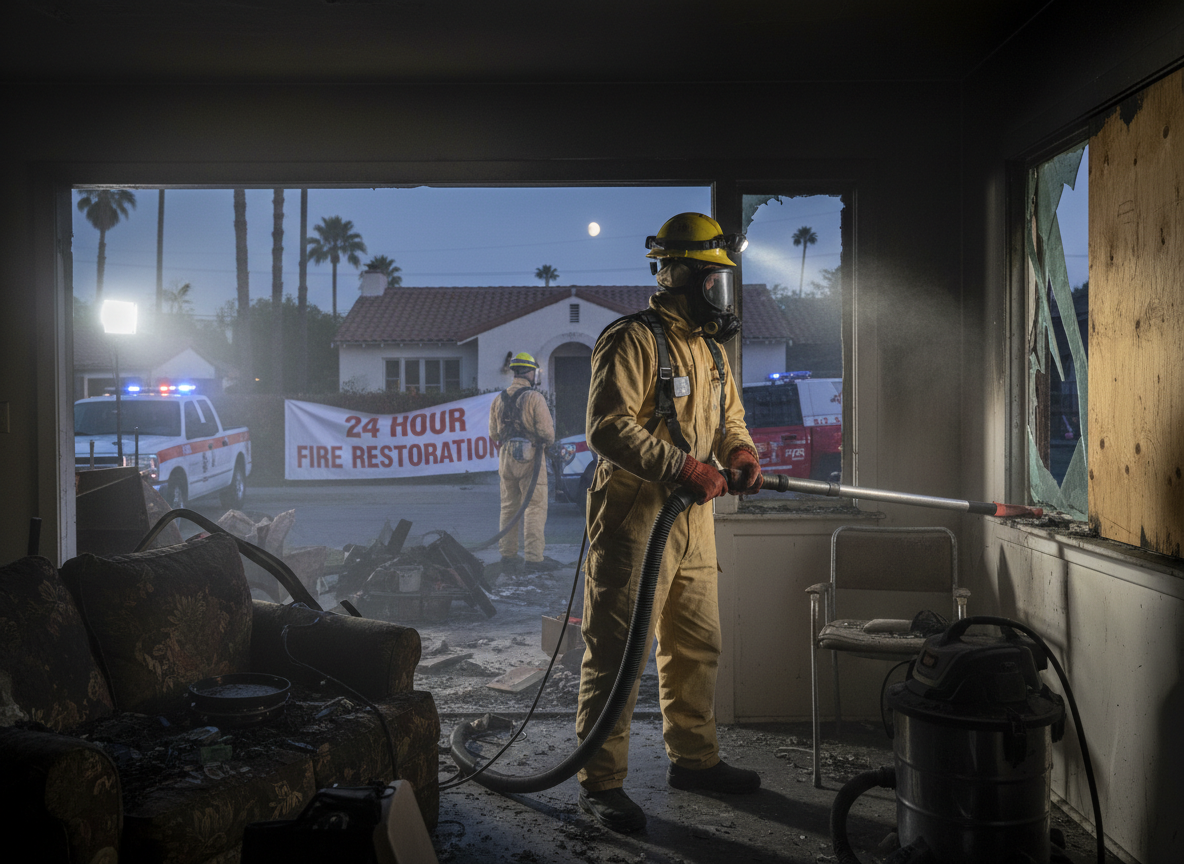
Toluca Lake homes built in the 1940s and 1950s often feature lath-and-plaster walls and tight attic spaces that trap smoke long after flames are out. A 24 hour fire restoration crew must pull baseboards and open ceiling cavities quickly because residual soot continues to stain surfaces and affect indoor air once temperatures drop at night. Local crews familiar with the neighborhood know to check for hidden ember paths along shared property lines near the lake where wind can carry sparks between structures.
Santa Ana conditions common in the Toluca Lake area dry out wood framing fast, increasing the risk of re-ignition in wall cavities if moisture is not introduced during cleaning. Restoration teams use negative-air machines sized for single-family lots rather than large commercial units because most properties sit on narrow streets with limited access. Skipping this step leaves odors that return when the first fall rains raise humidity levels.
Electrical systems in these older homes frequently run through knob-and-tube wiring that melts inside walls during even small fires. Technicians isolate circuits at the panel before starting demolition to avoid arc faults when power is restored. Final clearance testing must account for the proximity of the Hollywood Reservoir, where moisture can reactivate dormant smoke residues weeks later if surfaces were not properly sealed.
Technician insight
In Toluca Lake, the thing that catches most people out with 24 hour fire restoration is how the 1940s plaster walls on Riverside Drive let smoke travel into the narrow voids between studs and the exterior stucco; if you do not open those cavities the first night, the odor returns every time the marine layer moves in from the west.
Kitchen fire spread into attic on a Toluca Lake side street
A cooking fire ignited grease that traveled up a wall chase and into the attic space. We found heavy soot coating rafters two houses down the block due to shared rooflines. After pulling insulation and cleaning every surface, we sealed the wood and restored airflow so the family could return without the smell recurring during the next humidity shift.
How it works
- 1
Immediate Site Assessment
Arrive within the hour, document visible char, smoke paths, and structural compromise while the fire department still has the scene secured.
- 2
Containment and Safety Setup
Install plastic barriers and negative air to keep soot from migrating into unaffected rooms, then verify electrical and gas shutoffs.
- 3
Soot and Debris Removal
Remove charred materials, clean non-porous surfaces with appropriate agents, and dispose of contaminated drywall and insulation per local landfill rules.
- 4
Drying and Odor Neutralization
Deploy air movers and HEPA filtration sized for Toluca Lake home volumes, then apply sealants to remaining wood framing.
- 5
Rebuild and Final Clearance
Replace damaged sections to match original finishes, test for lingering odors, and walk the homeowner through the completed work.
Pricing
Upfront written estimates provided after the initial walk-through; final cost depends on square footage affected and hidden damage discovered during demolition.