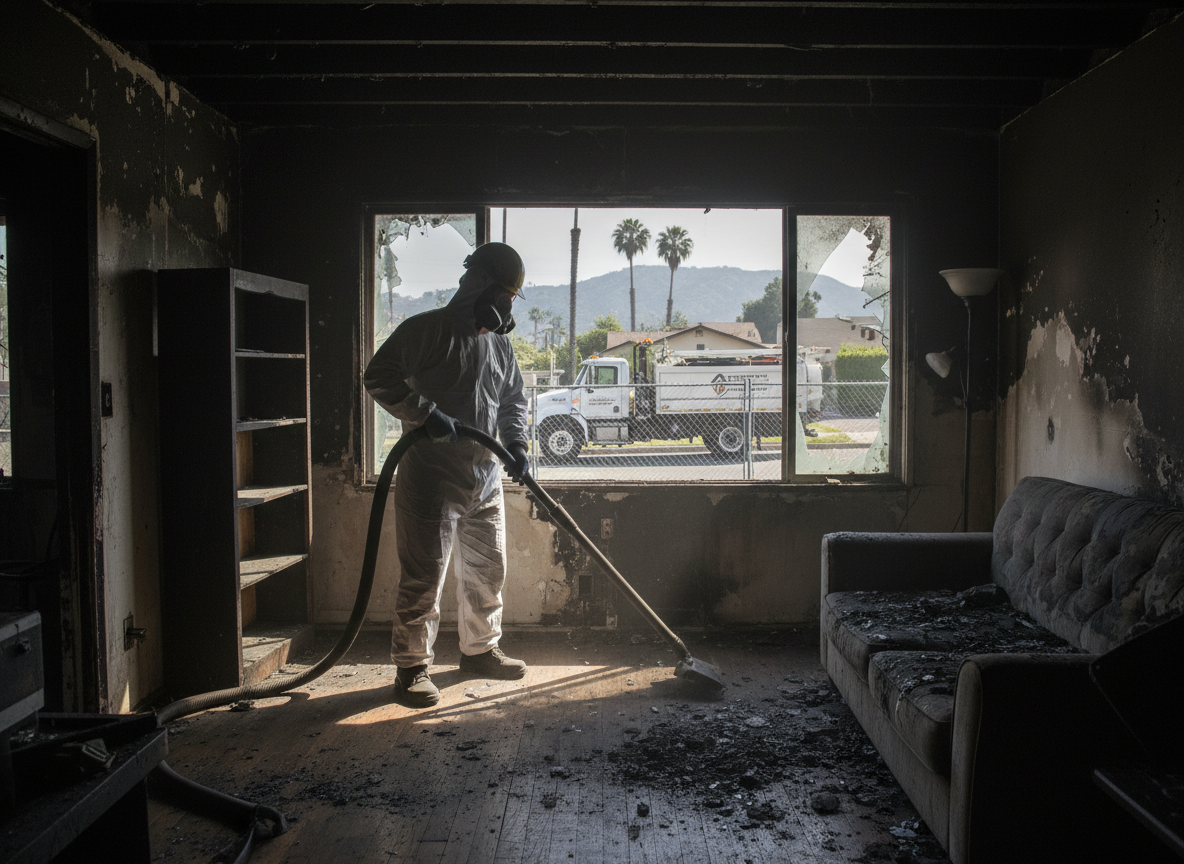
Toluca Lake homes, many built in the 1940s and 1950s along Riverside Drive and surrounding streets, often feature plaster walls, original wood trim and early electrical systems that complicate emergency fire damage restoration. Smoke and soot travel quickly through these single-story layouts and older HVAC runs, settling into porous surfaces and requiring targeted removal before corrosion sets in. Crews must first secure the structure, then map hidden damage paths that standard visual checks miss in this housing stock.
Urban fires in the Toluca Lake area frequently start in kitchens or from overloaded circuits common in pre-1960 builds. Once contained, the focus shifts to neutralizing acidic soot on metal fixtures and concrete foundations typical of the neighborhood. Delaying this step allows residues to etch surfaces permanently, especially in homes near the lake where humidity lingers after suppression efforts.
After initial safety checks, technicians isolate unaffected rooms to prevent cross-contamination during debris removal and surface cleaning. In Toluca Lake properties, this often means working around mature landscaping and tight lot lines that limit equipment access. Final verification includes odor testing and moisture mapping to confirm no lingering issues remain before occupants return.
Technician insight
In Toluca Lake, the thing that catches most people out with Emergency fire damage restoration is how soot travels through the shared wall cavities and original plaster in 1940s homes along Riverside Drive, turning a small kitchen fire into a whole-house problem if the first pass misses the cavities.
Electrical Fire Contained to One Room
Smoke from an outlet fire spread through a 1952 bungalow near the lake. Hidden soot was found in wall voids and the attic. We isolated the area, removed affected insulation, cleaned remaining surfaces, and restored airflow without opening the entire ceiling.
How it works
- 1
Safety and Structural Assessment
Technicians arrive on site, evaluate stability, and identify immediate hazards before any work begins.
- 2
Containment and Protection
Affected zones are isolated to stop soot migration into clean areas of the home.
- 3
Soot and Debris Removal
Loose residues and damaged materials are extracted using HEPA filtration and controlled methods.
- 4
Surface Cleaning and Odor Treatment
Specialized agents neutralize residues on remaining surfaces and neutralize odors.
- 5
Restoration and Verification
Repairs are completed and the property is tested for safety before handover.
Pricing
Costs depend on fire size, affected materials, and access challenges; an upfront quote follows the initial assessment.