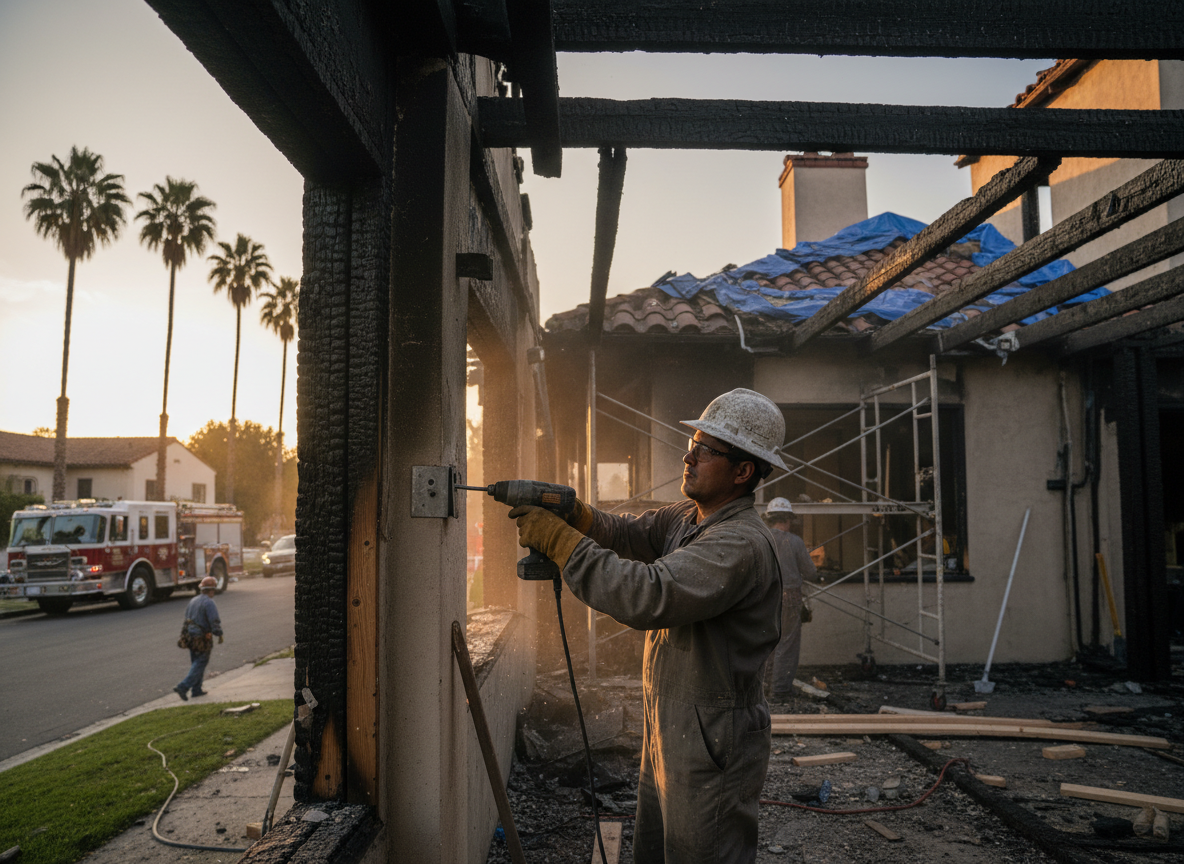
Toluca Lake homes built from the 1940s through the 1970s often feature balloon-framed Douglas fir and plaster-over-lath walls that can hide hidden char after a kitchen or electrical fire. When we open these cavities we frequently find that smoke and heat have traveled along the studs into the attic, requiring sistering of joists and replacement of charred blocking before drywall can be reinstalled. Los Angeles County requires that any structural member showing more than 25 percent section loss be replaced rather than patched, which changes both the scope and the inspection sequence.
Wildfire ash and embers that drift into the neighborhood during Santa Ana events introduce alkaline residues that corrode metal hangers and straps over time. We neutralize these surfaces with a pH-balanced rinse before installing new hardware, then verify that all connections meet current seismic retrofit standards for the area. Older homes near the lake also tend to have shallow crawl spaces with higher ambient moisture, so we install vapor barriers and new sill plates when bottom plates have been compromised.
Electrical and plumbing runs that penetrate fire-rated assemblies must be fire-caulked to current code before insulation and drywall go back in. Homeowners often overlook the need to bring these penetrations up to standard during insurance scope negotiations, which can delay final sign-off. We coordinate directly with the city inspector so the repair sequence satisfies both the fire damage claim and the building department in one visit.
Technician insight
In Toluca Lake the thing that catches most people out with structural repair after fire is how quickly smoke travels along the balloon framing in 1950s homes near the lake. The shallow crawl spaces hold just enough moisture that bottom plates rot after the fire department wets the structure, so you end up replacing sills you did not expect to touch.
Hidden Joist Damage in 1962 Ranch
A contained kitchen fire had charred the rim joist and two floor joists above the cabinets. Once we opened the ceiling we found the fire had followed the electrical chase into the attic. We sistered the joists, replaced the rim board, and fire-caulked the new wiring runs. Final inspection passed on the first visit and the homeowner was able to move back in without further delays.
How it works
- 1
Initial Assessment
We document visible char, hidden damage behind walls, and load-path interruptions using moisture meters and borescopes.
- 2
Shoring and Containment
Temporary supports are installed and the work area is sealed to prevent soot migration into unaffected rooms.
- 3
Member Replacement
Charred studs, joists, and plates are cut out and sistered or fully replaced with pressure-treated lumber where required by code.
- 4
Fire-Stopping and Finish
New penetrations are fire-caulked, vapor barriers added in crawl spaces, and surfaces prepped for drywall and paint.
Pricing
Cost depends on the number of load-bearing members affected and whether hidden damage extends into the attic or crawl space; we provide a written scope after the initial assessment.