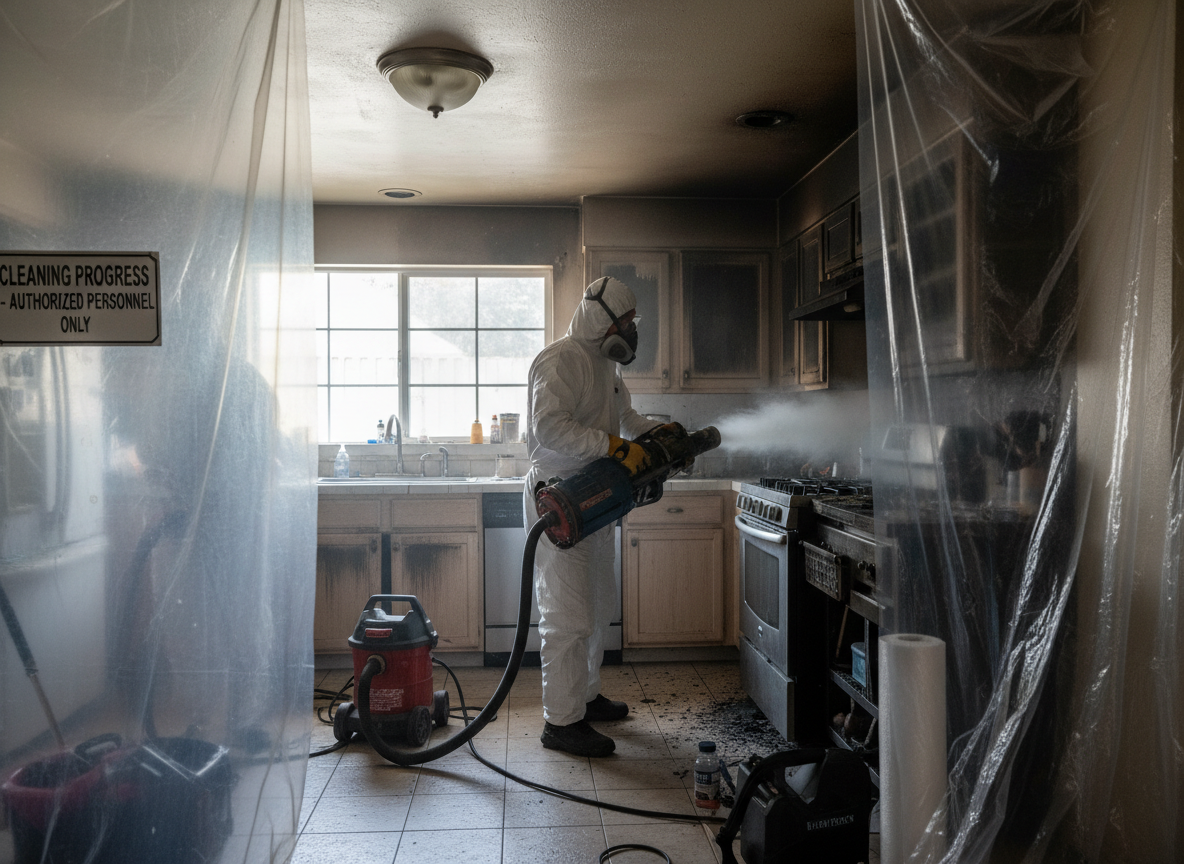
Smoke remediation in Toluca Lake homes requires addressing how combustion particles penetrate porous materials like drywall, insulation, and older hardwood floors common in the neighborhood's mid-century properties. Technicians use thermal fogging and hydroxyl generators to neutralize odors that standard cleaning misses, especially in HVAC systems that circulate residues through multiple rooms. Edge cases include smoke trapped behind built-in cabinetry or in attic spaces where Toluca Lake's older rooflines create dead air pockets that demand targeted access cuts rather than whole-wall demolition.
Local building codes in Los Angeles County require documentation of all affected materials before sealing or replacement during smoke remediation projects. Homeowners often overlook residue on electrical wiring and outlets, which can create ongoing off-gassing if not cleaned with specialized solvents. In practice, crews test surfaces with pH strips to confirm neutralization before applying sealers, preventing recurring smells that appear weeks later when humidity rises.
Toluca Lake's proximity to the Hollywood Reservoir and seasonal Santa Ana winds can push smoke deeper into structures during fires, requiring extra attention to window seals and exterior stucco cracks. Remediation teams document every step with photos for insurance adjusters, focusing on verifiable removal rather than masking agents that fail under real-world conditions.
Technician insight
In Toluca Lake, the thing that catches most people out with smoke remediation is how 1950s plaster walls and lath hold onto odors long after visible soot is gone. Homeowners try DIY sprays that only push the smell deeper into the substrate, then we end up cutting larger sections than planned because the residue migrated through the original wiring runs.
Smoke in Riverside Drive Duplex
A kitchen fire sent smoke through shared walls into the neighboring unit of a 1960s duplex near 10137 Riverside Dr. We found heavy residue in the common attic space and HVAC trunk line. Targeted demolition, fogging, and duct cleaning removed the odor without full ceiling replacement. The homeowner returned within five days with no recurring smell during the next wind event.
How it works
- 1
Initial Assessment
Inspect all affected rooms, HVAC, and hidden cavities for smoke migration patterns.
- 2
Source Removal
Extract loose soot and debris using HEPA vacuums and controlled demolition where needed.
- 3
Odor Neutralization
Apply thermal fogging and air scrubbing equipment to penetrate porous surfaces.
- 4
Final Verification
Test air quality and surfaces before returning the property to the homeowner.
Pricing
Costs depend on square footage affected, depth of smoke penetration, and whether HVAC or contents require separate handling.