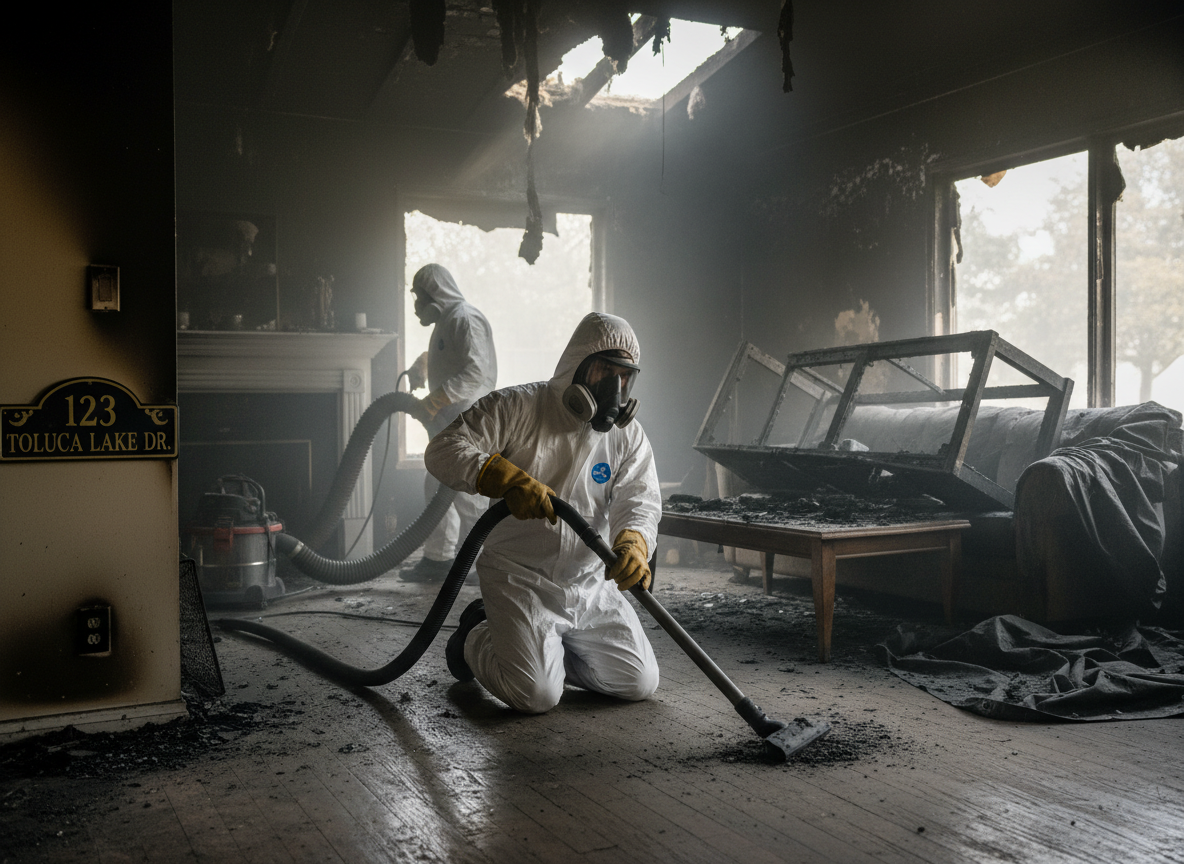
Toluca Lake homes built mostly between the 1940s and 1960s often feature plaster walls, hardwood floors, and original HVAC ductwork that trap fine smoke particles after a fire. These materials require different cleaning approaches than newer construction because soot bonds to lime-based plaster and penetrates unsealed wood. Dry fall conditions combined with occasional Santa Ana winds can push residue deeper into attics and wall cavities, making surface wiping alone insufficient. Technicians must use HEPA vacuums, alkaline cleaners, and controlled demolition to reach hidden deposits without spreading contamination to unaffected rooms.
Smoke odor lingers in porous surfaces such as insulation, carpet padding, and cabinet interiors long after visible soot is removed. In the Toluca Lake area, where many residences sit close to the lake and have limited cross-ventilation, trapped moisture from suppression water can react with smoke residues to create secondary odors. Proper clean up includes removing affected insulation, treating subfloors with enzyme solutions, and running air scrubbers with activated carbon filters for several days. Skipping these steps often leads to odor return once the home is reoccupied and temperatures fluctuate.
Los Angeles County building codes require verification that electrical and HVAC systems are free of corrosive soot before re-energizing. Technicians document each step with photos and moisture readings to satisfy insurance adjusters and avoid future liability. In older Toluca Lake bungalows near Riverside Drive, knob-and-tube wiring adds extra care because soot can accelerate corrosion on connections. Final clearance testing measures particulate levels and confirms the structure meets habitability standards before residents return.
Technician insight
In Toluca Lake, the thing that catches most people out with Fire damage clean up is how 1940s and 1950s plaster walls and original ductwork trap soot that later reactivates with our dry climate and occasional wind events, requiring full cavity access rather than surface cleaning alone.
Attic and HVAC Smoke in 1952 Bungalow
Smoke from a contained electrical fire traveled through the attic of a Riverside Drive home. We found heavy soot coating insulation and inside the main trunk line. Targeted removal of affected insulation, duct cleaning, and multi-day air scrubbing restored air quality without replacing the entire HVAC system.
How it works
- 1
Initial Assessment
Technicians inspect all affected rooms, HVAC runs, and attic spaces to map soot migration and document water damage from suppression efforts.
- 2
Containment and Safety Setup
Plastic barriers and negative air machines isolate the work zone to prevent cross-contamination into clean areas of the Toluca Lake home.
- 3
Soot Removal and Cleaning
HEPA vacuuming, chemical sponges, and alkaline washes remove residues from walls, ceilings, floors, and contents while protecting original plaster and wood finishes.
- 4
Odor Neutralization and Drying
Ozone or hydroxyl generators combined with air scrubbers eliminate lingering smoke smells; dehumidifiers address moisture trapped in cavities.
- 5
Final Verification
Post-cleaning inspection confirms particulate levels are safe and HVAC systems are clear before the property is released for occupancy.
Pricing
Cost depends on square footage affected, smoke migration into HVAC and attics, and whether contents require separate cleaning; upfront quotes provided after inspection.