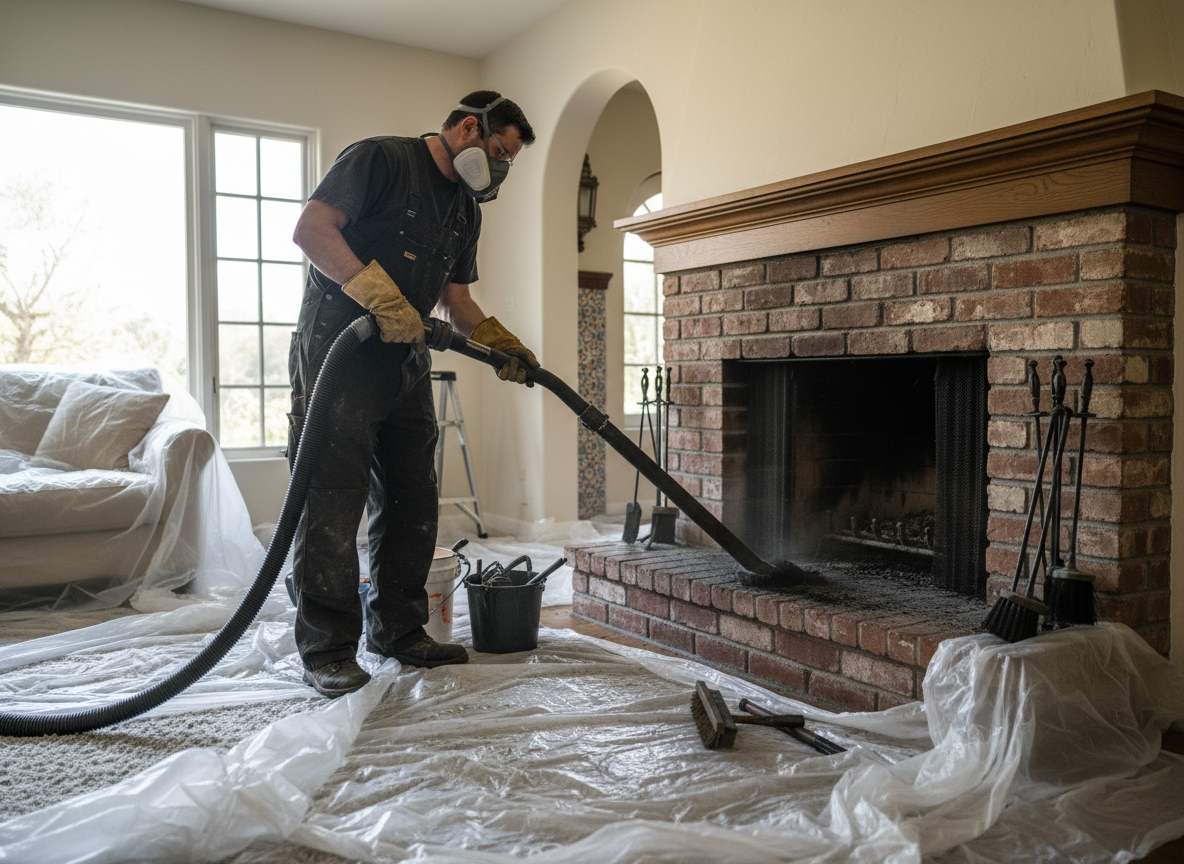
Soot from structure fires in Toluca Lake settles as a fine, oily, acidic film that corrodes metal fixtures, etches glass, and discolors plaster walls common in 1920s-1950s homes near the lake. Technicians test pH levels on surfaces before any cleaning because alkaline cleaners can set the residue permanently into porous wood trim and fabric. Negative air machines with HEPA filtration run continuously to prevent cross-contamination between rooms during the multi-day process.
In Los Angeles County properties around Toluca Lake, HVAC systems often pull soot deep into ductwork lined with older fiberglass. Technicians remove and clean registers first, then fog with encapsulants that lock remaining particles to duct walls before vacuuming. Skipping this step lets acidic particles re-circulate for weeks after visible surfaces appear clean.
Handling Porous Materials
Older Toluca Lake homes frequently feature textured plaster and hardwood floors that absorb soot below the surface. Dry-ice blasting or specialized sponges lift residue without water that could drive acids deeper into the substrate. Each material receives a separate test patch to confirm the method before full application.
Post-Fire Odor Control
Soot carries volatile organic compounds that linger in upholstery and insulation. Thermal fogging with odor-neutralizing agents follows surface cleaning, targeting hidden pockets in attics common to ranch-style homes in the neighborhood.
Technician insight
In Toluca Lake the thing that catches most people out with soot removal is the 1940s plaster walls that look clean after the first wipe but still test acidic because the soot has wicked into the texture; if you paint over it the acid keeps eating the new finish from underneath.
Soot in 1948 Toluca Lake Bungalow
A kitchen fire sent soot through the central HVAC into every room of a single-story home near Riverside Drive. Testing showed acidic residue embedded in the original plaster and hardwood floors. Crews isolated the system, performed dry-ice blasting on walls, and cleaned the ducts before applying encapsulant. The home passed air-quality clearance within five days.
How it works
- 1
Site Assessment
Technicians inspect every room and test surfaces for pH and soot depth while documenting pre-existing conditions in the Toluca Lake property.
- 2
Containment Setup
Plastic barriers and negative air units isolate affected zones to stop soot migration into clean areas of the home.
- 3
Surface Cleaning
Dry methods remove loose soot followed by pH-balanced solutions on walls, ceilings, and fixtures.
- 4
HVAC and Hidden Areas
Ducts, attics, and behind appliances receive targeted cleaning and encapsulation to eliminate embedded residue.
- 5
Final Verification
Air quality readings and surface checks confirm soot levels meet clearance standards before re-occupancy.
Pricing
Scope depends on fire size, soot migration into HVAC, and number of porous surfaces; quotes provided after on-site assessment.