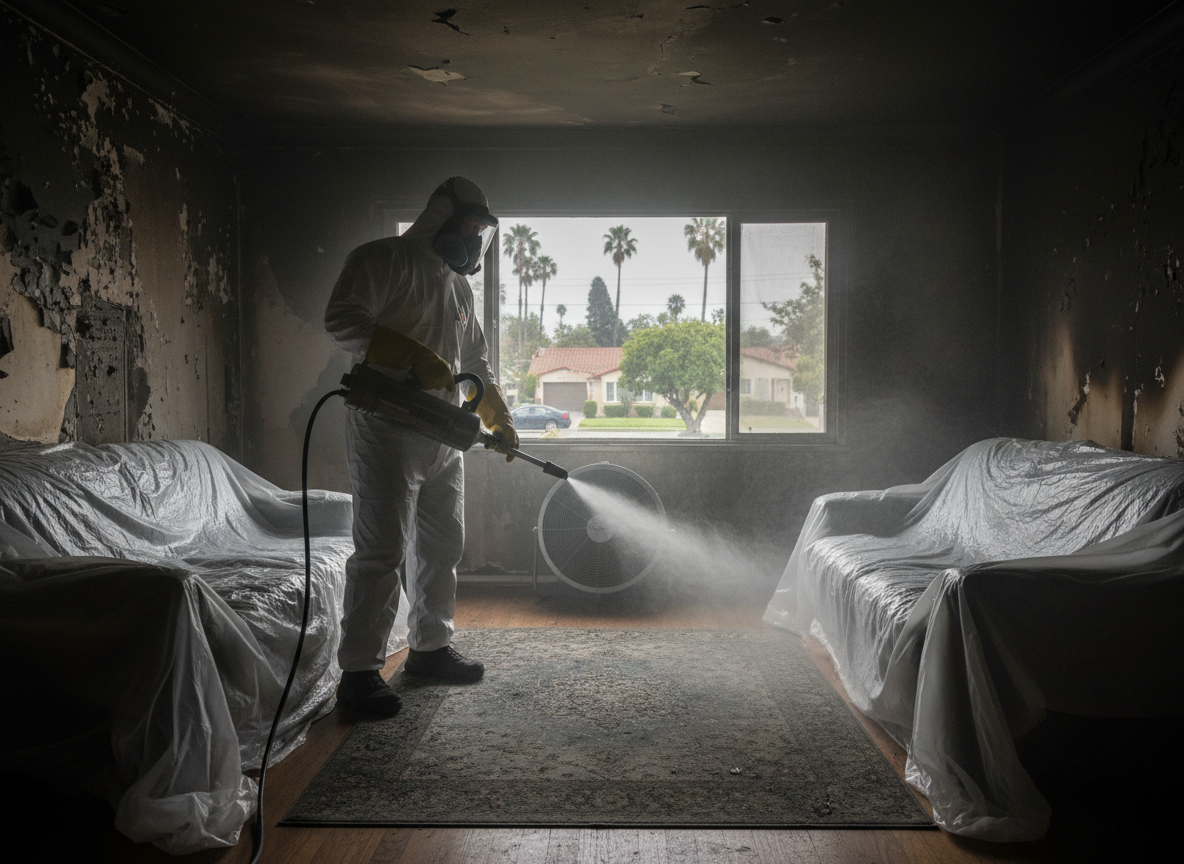
Smoke odor lingers in Toluca Lake homes because many structures from the 1950s and 1960s have plaster walls and forced-air systems that pull particulates deep into cavities and ductwork. Standard surface cleaning leaves residues that reactivate with humidity from the nearby lake or seasonal Santa Ana winds. Technicians trace migration paths through attics, crawl spaces, and shared walls common in the neighborhood before applying thermal fogging or hydroxyl generators matched to the fuel type burned.
Porous materials such as insulation, carpet padding, and unsealed hardwood floors absorb odors differently than newer builds. In Toluca Lake properties, crews often remove and replace affected sections rather than mask smells, especially when soot has settled in the original knob-and-tube wiring areas or around brick fireplaces. Edge cases include multi-unit buildings where smoke travels through shared vents, requiring coordination with neighbors and verification that all odor sources are neutralized before sealing.
Post-treatment testing uses both olfactory checks and air sampling to confirm no re-emergence once the home returns to normal temperature cycles. Homeowners are advised against running HVAC until ducts are cleaned, as the first cool-down after treatment can pull remaining molecules back into living spaces. This step-by-step verification prevents callbacks that occur when only visible surfaces receive attention.
Technician insight
In Toluca Lake, the thing that catches most people out with Odor removal after fire is how smoke gets pulled through the original 1950s ductwork that runs under the lake-adjacent homes; once humidity spikes, those residues reactivate weeks later if the ducts were never opened.
Smoke trapped in 1962 ranch HVAC
Homeowner reported persistent odor after a kitchen fire near the lake. Inspection found heavy soot in the original metal ducts running through the crawl space. Crews opened access points, cleaned the runs, and treated the plaster walls. Odor did not return after the first temperature drop.
How it works
- 1
Site Assessment
Inspect all affected rooms, HVAC runs, and attic spaces to map smoke travel through the home's construction.
- 2
Source Removal
Extract charred debris and saturated insulation that continue releasing odors after the fire is out.
- 3
Air and Surface Treatment
Apply appropriate fogging or oxidation methods to neutralize embedded smoke molecules in walls and ducts.
- 4
Verification and Clearance
Test air quality and surfaces under varying conditions to confirm odors do not return.
Pricing
Cost varies with square footage affected, depth of smoke migration into cavities, and whether HVAC cleaning is required.