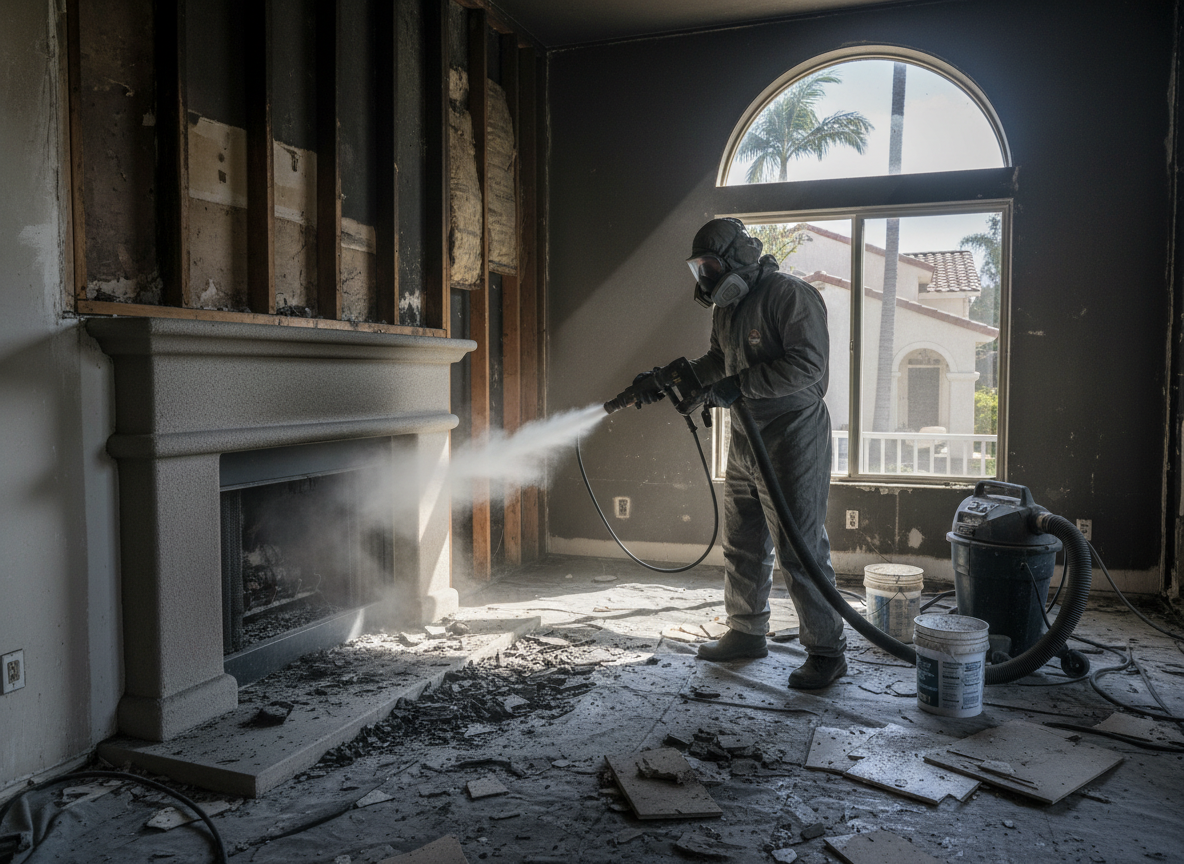
Smoke from structure fires in Toluca Lake often travels through the open floor plans and shared plaster walls typical of 1940s-1960s ranch homes near the lake. Residues settle into HVAC ducts, attic insulation, and hardwood floors, creating persistent odors that worsen during the region's occasional high-humidity periods. Technicians must test surfaces for pH levels and use specialized cleaners that neutralize alkaline soot without damaging original wood trim or vintage fixtures common in these neighborhoods.
Restoration work here frequently involves separating smoke-affected zones from unaffected areas in compact lots where homes sit close together. In Toluca Lake, smoke can migrate into neighboring properties through shared vents or under eaves, requiring coordination with adjacent owners. Crews document every layer of drywall and carpet padding removed, since incomplete removal leads to recurring smells when Santa Ana winds increase airflow through the house.
Porous materials such as acoustic ceiling tiles and built-in cabinetry absorb smoke particles quickly in the dry climate punctuated by sudden moisture events. Restoration teams use air scrubbers with activated carbon and hydroxyl generators sized for the square footage of these single-story homes. Final clearance testing checks for volatile organic compounds that remain after visible soot is gone, especially in kitchens where grease-laden smoke bonds to surfaces differently than standard structural smoke.
Local building practices mean many Toluca Lake homes have original knob-and-tube wiring or early aluminum circuits that complicate cleaning around electrical boxes. Technicians isolate power before treating junction areas and recommend licensed electricians for any follow-up. This step prevents hidden corrosion that could surface months later during the cooler winter months when heating systems run continuously.
Technician insight
In Toluca Lake, the thing that catches most people out with smoke damage restoration is how residues stay active in the original plaster and lathe walls of 1950s homes near the lake, where even light humidity from the water keeps odors blooming weeks after the fire is out.
Kitchen fire smoke in a Riverside Drive ranch
A cooking fire sent heavy smoke through the open kitchen into the living room and master bedroom of a 1958 single-story home. Inspection showed grease particles lodged in the original ceiling texture and HVAC return. Crews contained the three rooms, cleaned ducts, and ran hydroxyl treatment for 48 hours. The homeowner returned to a house free of odor with all original woodwork intact.
How it works
- 1
Initial Assessment
Technicians arrive within hours, map smoke migration paths through the home's layout, and test surfaces for residue depth.
- 2
Containment Setup
Negative air machines and plastic barriers isolate affected rooms to stop cross-contamination into clean areas of the Toluca Lake property.
- 3
Residue Removal
HEPA vacuuming, chemical sponges, and pH-adjusted cleaners lift soot from walls, ceilings, and HVAC components without spreading particles.
- 4
Odor Neutralization
Ozone or hydroxyl treatments run in sealed rooms, followed by ventilation and re-testing to confirm odors are eliminated.
- 5
Final Clearance
Independent air quality checks and surface sampling verify the home meets restoration standards before contents are returned.
Pricing
Upfront quotes after on-site inspection; final cost depends on square footage affected, depth of smoke penetration into insulation and ducts, and whether contents require separate treatment.