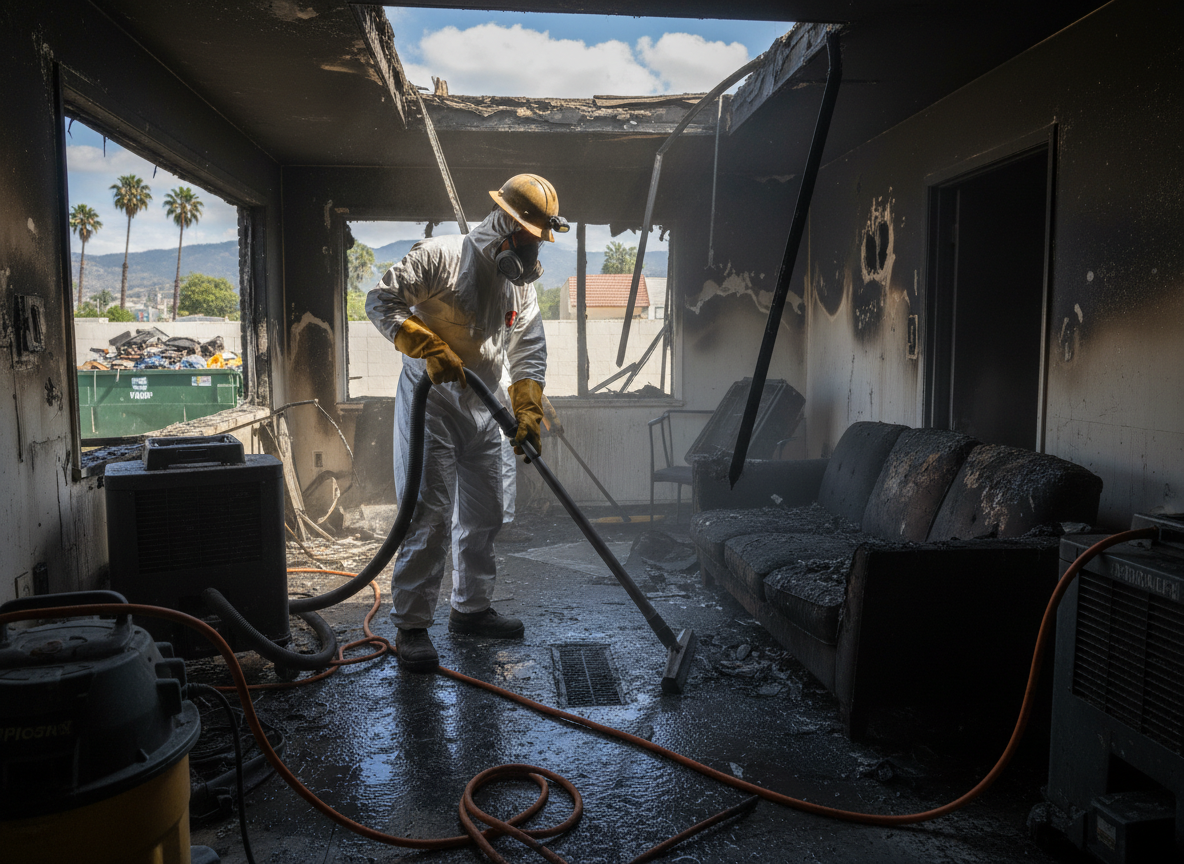
Toluca Lake apartments, many constructed in the 1940s and 1950s along Riverside Drive and near the Warner Bros. lot, feature lath-and-plaster walls and shared HVAC systems that trap fine soot particles after even small kitchen or electrical fires. These older builds require HEPA vacuuming and chemical sponges on textured ceilings rather than standard wiping, because the porous surfaces hold odors that reappear when humidity rises during winter rains. Technicians must also isolate units quickly because the dense layout lets smoke travel through common corridors and laundry chutes into neighboring apartments.
After a fire is extinguished, the first priority is mapping smoke migration paths using moisture meters and thermal imaging to locate hidden residue inside wall cavities and above drop ceilings common in Toluca Lake rentals. Crews then set up negative-air machines at each affected doorway to prevent cross-contamination while removing charred cabinetry and flooring. Because many buildings sit on the flat valley floor with shallow foundations, any water used during suppression can migrate laterally under slab floors, creating secondary mold risks that must be addressed before ozone or hydroxyl treatments begin.
Final clearance testing includes air sampling for VOCs and visual inspection under black light to confirm no oily film remains on kitchen backsplashes or bathroom fixtures. Owners receive a written scope noting which surfaces were cleaned versus replaced, satisfying insurance adjusters who frequently visit properties in this ZIP code.
Technician insight
In Toluca Lake, the thing that catches most people out with Apartment fire cleanup is how the 1940s-era apartments along Riverside Drive share shallow wall cavities and laundry chutes that let smoke travel two or three units away even when winds are calm, so we always inspect neighboring apartments on the same floor before starting any cleaning.
Electrical fire in a Riverside Drive apartment
A small electrical fire in a 1952 fourplex spread smoke through the shared return-air duct. We found oily film on ceilings two units away and moisture trapped under the slab from suppression water. After isolating the HVAC, removing affected plaster sections, and running negative air for 48 hours, the building passed clearance testing and tenants moved back in within five days.
How it works
- 1
Initial Assessment
Technicians arrive within hours, document all affected units, and test for hidden smoke in shared walls and HVAC runs typical of Toluca Lake apartments.
- 2
Containment and Removal
Negative pressure zones are established; charred materials and loose soot are removed while protecting adjacent units from cross-contamination.
- 3
Deep Cleaning
HEPA filtration, chemical sponges, and odor-neutralizing agents treat plaster, woodwork, and ductwork until no residue remains.
- 4
Verification and Clearance
Air quality tests and visual inspections confirm the space meets habitability standards before residents return.
Pricing
Pricing is determined after on-site inspection; factors include number of units affected and extent of smoke migration through shared systems.