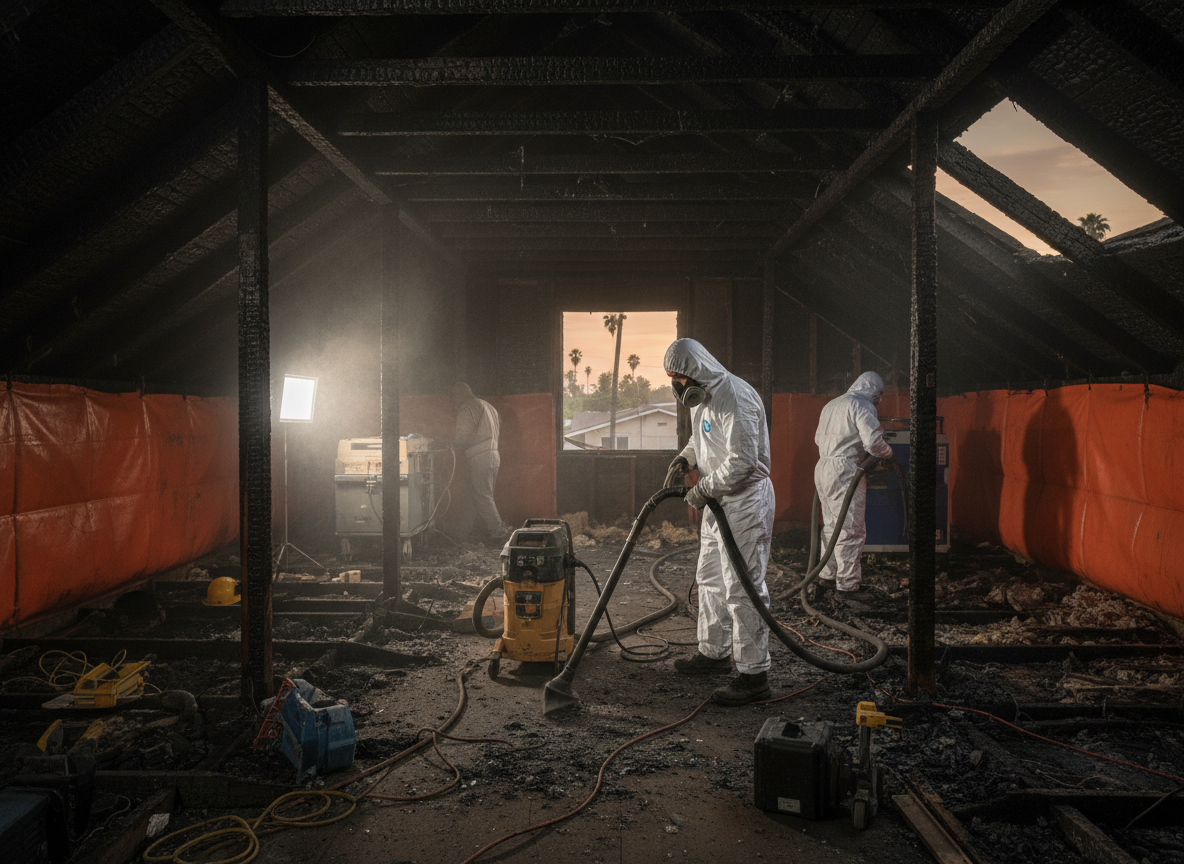
Attic fires in Toluca Lake often start from electrical faults in pre-1970 homes along streets like Riverside Drive and Moorpark Street, where knob-and-tube wiring meets modern loads. Once flames reach the attic, heat and smoke travel through plaster-and-lath ceilings and into wall cavities, leaving residues that standard cleaning misses. Restoration requires removing affected insulation, treating charred rafters with encapsulants rated for smoke, and verifying that HVAC ducts running through the space have not carried particulates into living areas.
Southern California’s dry air and occasional Santa Ana wind events can accelerate soot adhesion to fiberglass batts and cellulose, turning minor attic incidents into full ceiling replacements. Crews must coordinate with Los Angeles County building inspectors when load-bearing collar ties or ridge beams show charring, as repairs may trigger seismic retrofitting requirements in homes built before current codes. Homeowners frequently underestimate how far smoke travels downward through recessed lighting cans, requiring soffit and drywall demolition beyond the obvious burn zone.
Edge cases include multi-story properties near Toluca Lake Park where attic access is limited by finished bonus rooms, forcing negative-air machines to be staged on the exterior to avoid pressurizing lower levels. Proper disposal of contaminated insulation follows Los Angeles County hazardous waste guidelines, and replacement materials must meet current R-value standards while allowing for proper ventilation to prevent future moisture issues in the region’s mild winters.
Technician insight
In Toluca Lake, the thing that catches most people out with attic fire restoration is how often smoke travels down through original plaster-and-lath ceilings in 1940s–1960s homes along Riverside Drive, requiring full ceiling removal instead of just attic cleaning.
Attic Electrical Fire Near Moorpark Street
A homeowner reported an attic fire that started at an old junction box. Inspection revealed heavy soot migration through plaster ceilings into two bedrooms below. Crews removed insulation, treated rafters, and rebuilt affected ceiling sections while keeping the rest of the home livable during the multi-day process.
How it works
- 1
Initial Assessment
Technicians inspect the attic, map smoke paths through ceilings, and document structural charring while coordinating with the fire department report.
- 2
Containment and Safety Setup
Plastic barriers and negative air machines isolate the attic from living spaces; electrical hazards are tagged before any debris removal begins.
- 3
Material Removal and Cleaning
Burned insulation, charred wood, and smoke-affected drywall are removed; remaining surfaces receive HEPA vacuuming and chemical neutralization.
- 4
Repair and Restoration
New insulation is installed to current standards, damaged rafters are sistered or replaced, and ceilings are rebuilt with proper ventilation restored.
Pricing
Upfront quotes follow a detailed on-site inspection; costs depend on square footage affected, depth of smoke penetration, and any required structural work.