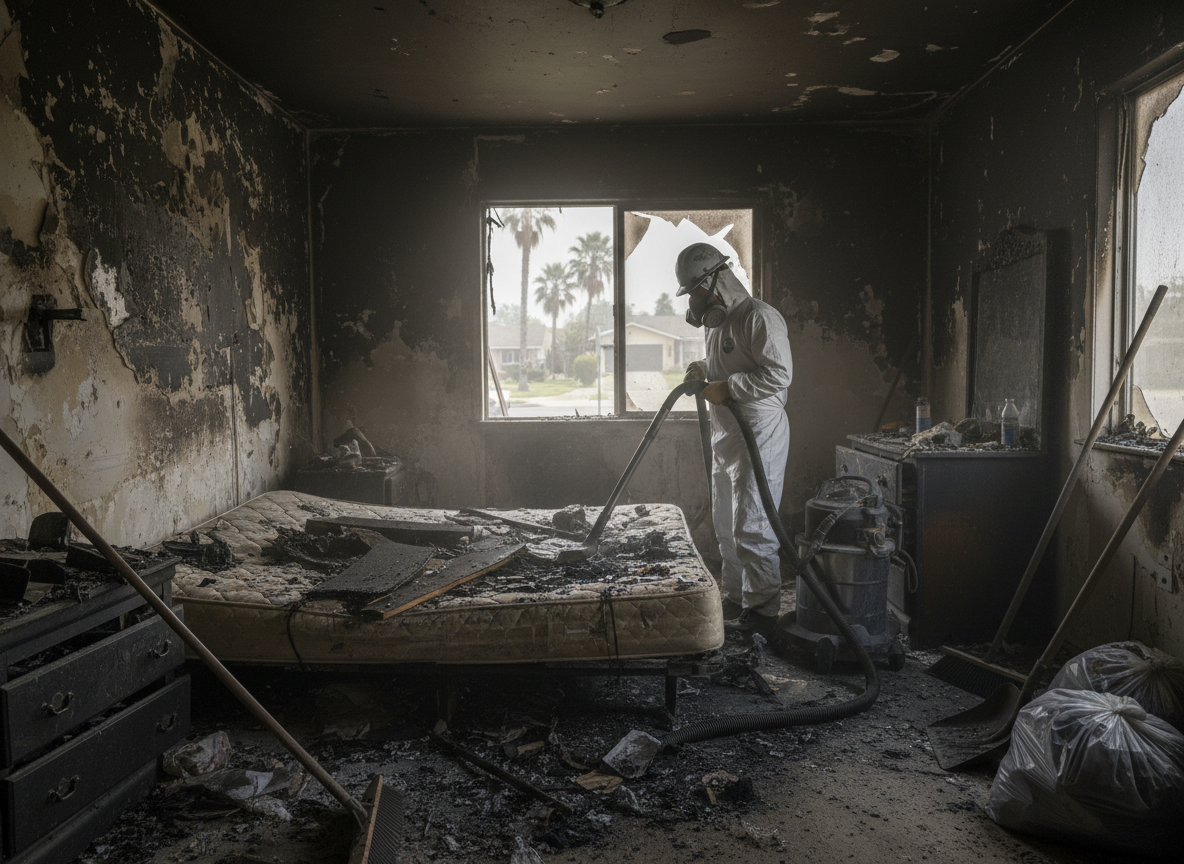
Toluca Lake bedrooms often feature mid-century wood framing and lath-and-plaster construction that traps soot and odors far deeper than modern drywall. A typical electrical fire starting from outdated wiring behind nightstands can send smoke through ceiling voids and into adjacent closets, requiring removal of baseboards and inspection of HVAC returns that run through the room. Technicians must test for hidden charring in joists before sealing, because residual heat can re-ignite if insulation is left saturated with combustion byproducts.
Dry Southern California air combined with occasional Santa Ana winds accelerates smoke migration through small gaps around window frames and electrical boxes common in 1950s Toluca Lake homes. Cleanup crews use negative-air machines positioned at exterior doors on Riverside Drive properties to prevent cross-contamination into living areas. Porous materials such as wool carpets and cotton drapes absorb acidic smoke particles that etch finishes if not neutralized within the first 48 hours.
Los Angeles County code requires documentation of all removed structural elements when fire damage affects load-bearing bedroom walls, especially in homes near the lake where soil movement can compound settling after repairs. Edge cases include fires that travel upward through balloon framing into attics, leaving visible staining only on one side of a shared wall with a neighboring property in the same block.
Owner-operated teams based at 10137 Riverside Dr respond within hours because delayed treatment allows smoke to bond permanently with the original hardwood floors found in many Toluca Lake bedrooms. Each job includes thermal imaging to locate pockets of trapped moisture from suppression water that can otherwise cause mold weeks later.
Technician insight
In Toluca Lake the thing that catches most people out with Bedroom fire damage cleanup is how pre-1960 lath-and-plaster walls along Riverside Drive hold acidic smoke that reactivates with the slight humidity that drifts off the lake after a rain, forcing extra neutralization passes that homeowners never expect.
Electrical fire in 1950s Toluca Lake bedroom
A bedside lamp shorted and ignited nearby bedding in a home near the lake. Soot had traveled through ceiling voids into the hallway closet. Crews removed baseboards, treated the plaster with alkaline rinses, and ran hydroxyl units for 48 hours before clearing the space for repainting.
How it works
- 1
Initial Assessment
Technicians arrive 24/7, document visible char and smoke patterns, and test air quality in the affected bedroom and connected spaces.
- 2
Containment Setup
Plastic barriers and negative air machines isolate the bedroom from the rest of the Toluca Lake home to stop soot spread.
- 3
Soot and Residue Removal
HEPA vacuums, chemical sponges, and pH-neutral cleaners lift acidic particles from plaster, wood, and fabrics without spreading residue.
- 4
Odor Neutralization and Drying
Ozone or hydroxyl generators treat embedded smells while dehumidifiers pull remaining moisture from walls and flooring.
- 5
Final Clearance
Air sampling and visual inspection confirm the bedroom meets pre-loss conditions before contents are returned.
Pricing
Cost depends on square footage affected, depth of smoke penetration into plaster, and whether HVAC cleaning is required; upfront quotes provided on site.