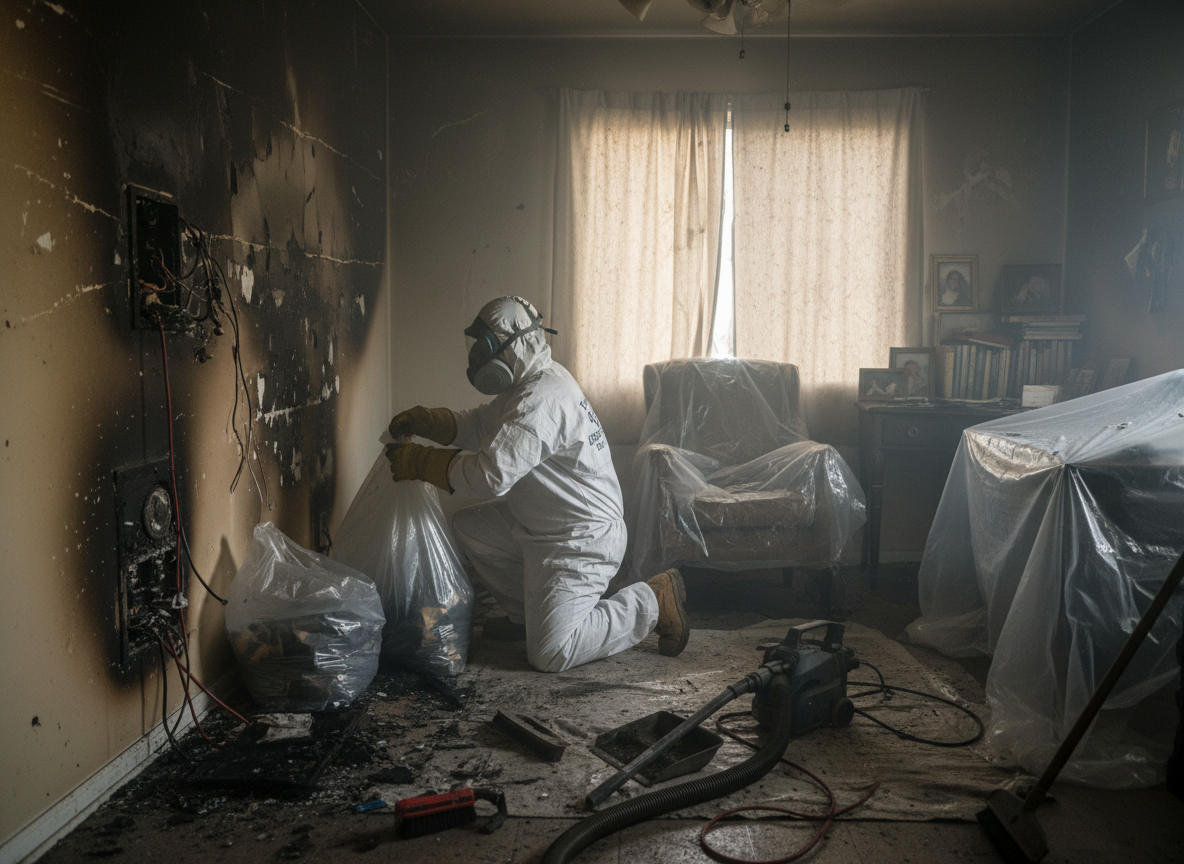
Electrical fires in Toluca Lake often start in homes built between the 1930s and 1950s where knob-and-tube or early aluminum wiring runs through plaster walls and attics. Once the power is isolated, technicians must trace every circuit because melted conductors can leave carbon tracks that re-ignite days later. Soot from these fires carries acidic residues that etch copper pipes and HVAC coils if left untreated, especially during the dry summer months when ventilation is limited.
Cleanup begins with HEPA vacuuming and chemical neutralization of porous surfaces such as oak flooring and built-in cabinetry common in the neighborhood. Technicians open walls only where thermal imaging shows heat signatures, then replace insulation and rewire to current code while preserving original architectural details. In homes near the lake, elevated humidity after winter rains can trap moisture behind charred studs, requiring targeted drying before new drywall is hung.
Edge cases include fires that travel through shared attic spaces between adjacent properties on Riverside Drive and Moorpark Street. These require coordination with neighboring owners and temporary power shutoffs that affect multiple households. All debris is removed to a licensed facility; no material is left on site because residual copper and plastic fragments can leach into soil typical of the flat Toluca Lake basin.
Technician insight
In Toluca Lake the thing that catches most people out with electrical fire cleanup is how knob-and-tube wiring runs through double plaster walls in 1940s homes along the lake; once you open one wall you often find the fire tracked two rooms away because the old cloth insulation never fully burned.
Hidden Circuit in 1948 Bungalow
A small electrical fire started behind a bedroom outlet in a home near Riverside Drive. Thermal imaging revealed melted wiring running through the attic shared with the neighboring property. Technicians isolated the circuit, removed the damaged runs, and dried moisture trapped in the plaster before patching to match the original texture.
How it works
- 1
Secure and Assess
Isolate power at the main panel, document visible damage with photos, and use thermal imaging to locate hidden hot spots in walls and ceilings.
- 2
Remove Contaminated Materials
HEPA vacuum soot, cut out charred insulation and wiring, and bag debris for off-site disposal while protecting remaining hardwood floors.
- 3
Neutralize and Dry
Apply pH-neutral cleaners to surfaces, set drying equipment, and monitor moisture levels in plaster and framing for 48 to 72 hours.
- 4
Repair and Verify
Install new wiring to code, patch walls, and run final electrical load tests before returning the home to the owner.
Pricing
Pricing depends on square footage affected, number of circuits involved, and whether plaster walls must be opened.