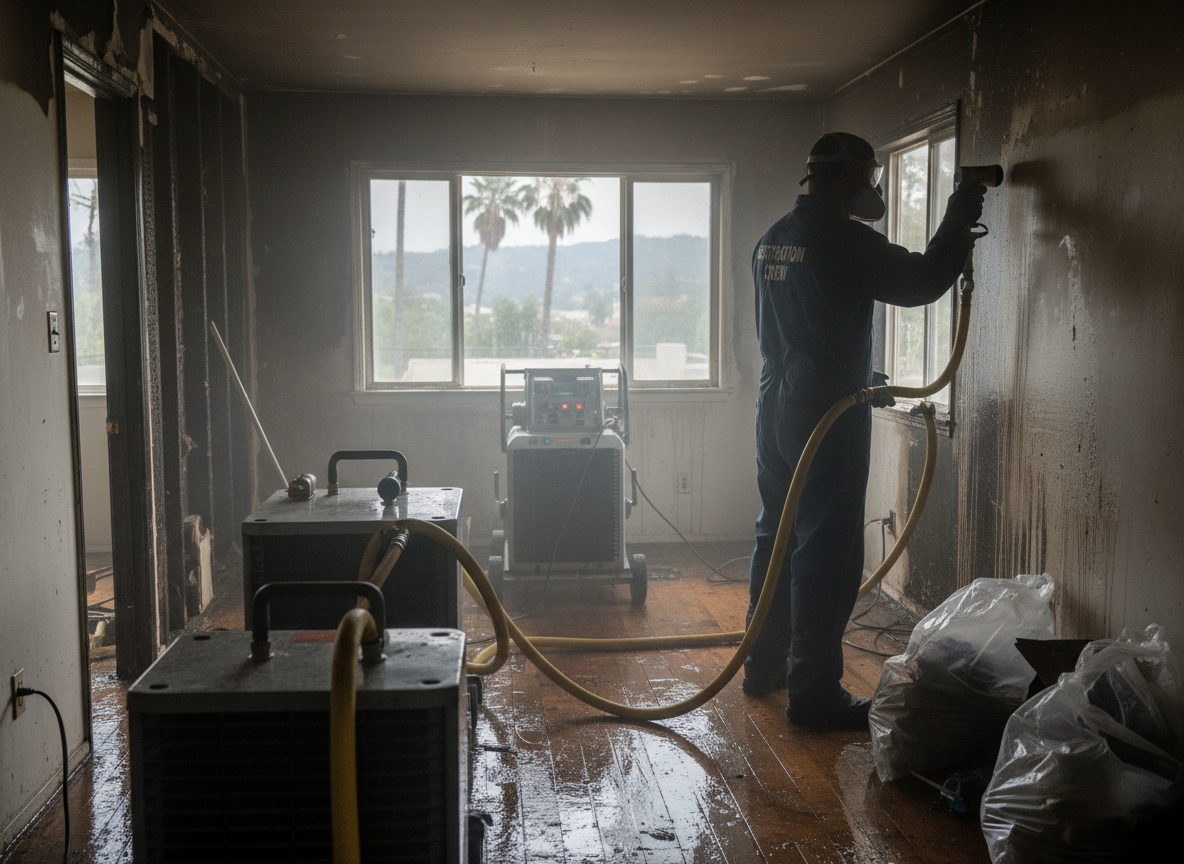
Toluca Lake homes built mostly between the 1940s and 1960s often feature lath-and-plaster walls and knob-and-tube wiring. After a fire, soot penetrates these materials deeply, and any water used for suppression or from winter rains can saturate the plaster and subfloors. Restoration requires removing affected layers without disturbing remaining wiring that may still be live. Technicians check for hidden moisture pockets behind built-in cabinetry common in mid-century kitchens before drying begins.
Winter storms in the Toluca Lake area bring sudden heavy rain that can enter through fire-damaged roofs or vents. Older single-story ranches near the lake itself sit on flatter lots where water pools against foundations. When fire and flood occur together, crews must first stabilize the structure, then extract water from crawl spaces that many Toluca Lake properties have, before addressing smoke residue on hardwood floors and built-in shelving.
Los Angeles County building codes require permits for any electrical or structural work after combined fire and water events. Restoration teams coordinate with local inspectors to document hidden damage in attics common in these homes. Proper sequencing prevents mold growth in the dry Southern California climate once the initial drying phase ends.
Technician insight
In Toluca Lake, the thing that catches most people out with Fire and flood restoration is how 1950s plaster walls and crawl spaces under flat lots trap both soot and winter rain runoff, turning what looks like a quick smoke cleanup into days of hidden drying work once the rains hit.
Fire and Rain Damage on a Riverside Drive Bungalow
A kitchen fire spread soot through a 1952 Toluca Lake home; firefighters used water that soaked plaster walls and the crawl space. We mapped moisture behind built-in cabinets, extracted water, and dried the structure over four days before smoke cleaning. Final repairs passed county inspection without rewiring the original knob-and-tube sections.
How it works
- 1
Initial Assessment
Technician inspects fire and water damage at the Toluca Lake property and documents affected materials.
- 2
Stabilization
Board-up and tarping protect the structure from further rain or smoke infiltration.
- 3
Water Extraction and Drying
Remove standing water from floors and crawl spaces then use dehumidifiers suited to the local climate.
- 4
Smoke and Soot Removal
Clean surfaces and HVAC systems using methods appropriate for plaster and wood found in area homes.
- 5
Restoration and Repairs
Replace damaged sections and coordinate with county inspectors for final approval.
Pricing
Cost depends on the extent of combined fire and water damage, materials affected, and any required permits; quotes provided after inspection.