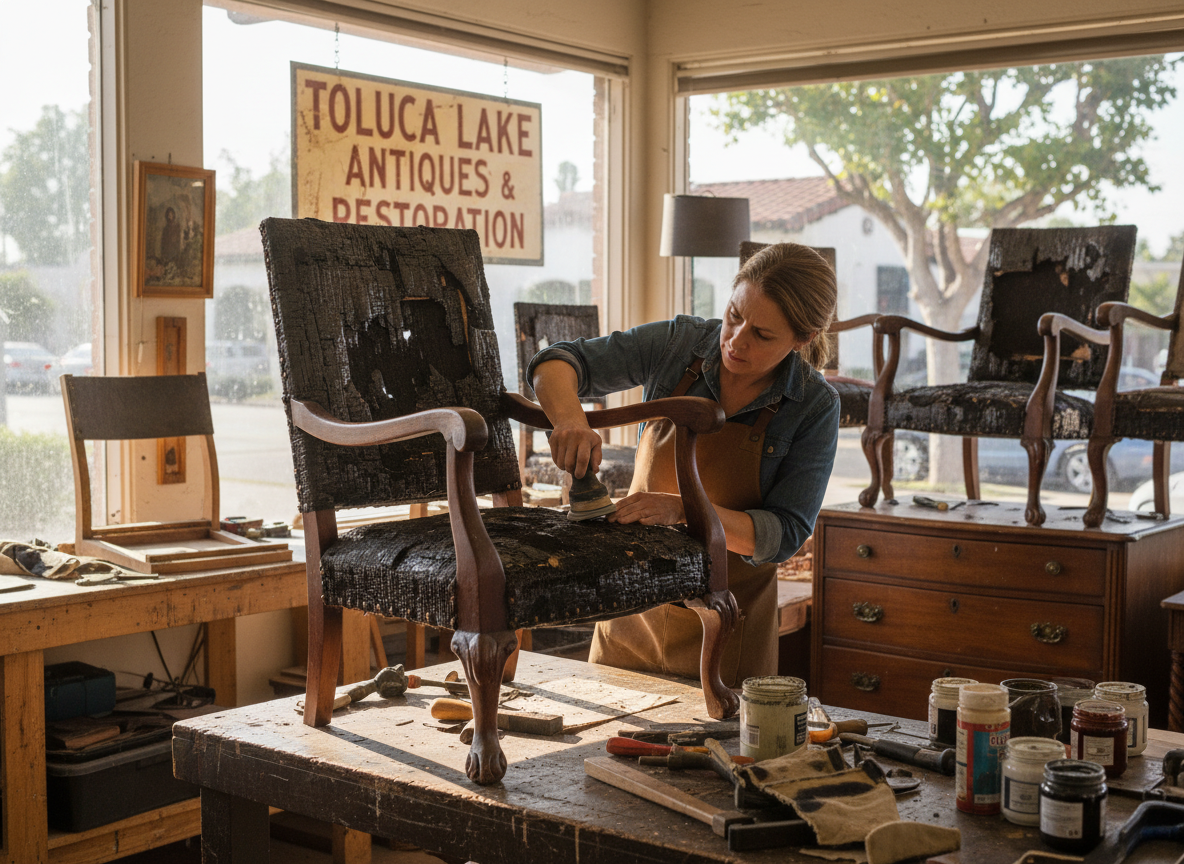
Toluca Lake homes built from the 1940s through the 1970s often contain solid oak, walnut and teak pieces alongside mid-century upholstered items. After a structure fire, soot penetrates open-grain wood and fabric weaves within hours, especially when the Santa Ana winds push smoke through open windows. We begin with pH-neutral soot removal on-site or at our Riverside Drive shop, then test each finish for lifting before any solvent work. Older lacquers and shellacs common in these neighborhoods can craze or discolor if aggressive cleaners are used, so we document every layer before proceeding.
Upholstery in Toluca Lake properties frequently combines horsehair, cotton batting and foam from different decades. Smoke odor binds to protein fibers and foam, requiring separate treatment paths. We remove cushions and skirts first, then use vapor-phase odor neutralizers on frames while the textiles undergo wet or dry cleaning based on fiber test results. Edge cases include glued joints that fail after heat exposure and veneer that delaminates when moisture from suppression efforts reaches the substrate. We always photograph and note existing cracks or water rings before any work begins so the homeowner sees the starting condition.
Material-Specific Challenges
Vintage pieces near the Toluca Lake golf course or along Moorpark Street often sit in rooms with varying humidity from the adjacent reservoir. This creates micro-cracks that trap soot deeper than surface cleaning reaches. We use localized HEPA vacuuming followed by dry sponging on raised grain before any liquid product touches the surface. When metal hardware shows oxidation from acidic smoke, we isolate those components during the cleaning phase to prevent staining adjacent wood.
Post-Restoration Considerations
Once cleaned, pieces are acclimated in our controlled shop environment for 48 hours before final inspection. Homeowners in the 91602 zip code receive a written summary of every product used and a care card noting how local dry seasons can affect newly refinished surfaces.
Technician insight
In Toluca Lake the thing that catches most people out with fire-damaged furniture restoration is how quickly soot travels through the older single-wall construction homes near the lake. Mid-century pieces with unsealed backs or bottoms pull smoke in from every direction, and once it reaches the horsehair or early foam it is nearly impossible to remove without disassembly.
Soot on a 1960s teak credenza
A kitchen fire in a 1950s Toluca Lake home sent smoke through the open living area. We found heavy soot inside the credenza drawers and under the top veneer. After disassembly, dry cleaning and localized refinishing, the piece returned to service without visible staining or odor.
How it works
- 1
Initial Assessment
We examine each piece at the Toluca Lake property or our Riverside Drive location, noting construction, existing damage and smoke penetration depth.
- 2
Soot and Odor Removal
HEPA vacuuming, dry sponging and pH-neutral agents lift surface soot while vapor treatments address embedded odors in wood and fabric.
- 3
Repair and Refinishing
Loose joints are stabilized, veneer is re-adhered where needed, and finishes are matched using compatible products for the original materials.
- 4
Final Inspection and Return
Each item is reviewed under multiple light sources before delivery back to the Toluca Lake home with care instructions.
Pricing
Cost depends on the number of pieces, material types and extent of smoke versus direct flame damage.