2026-10-16 ·
Identifying Hidden Smoke Damage In Toluca Lake Houses
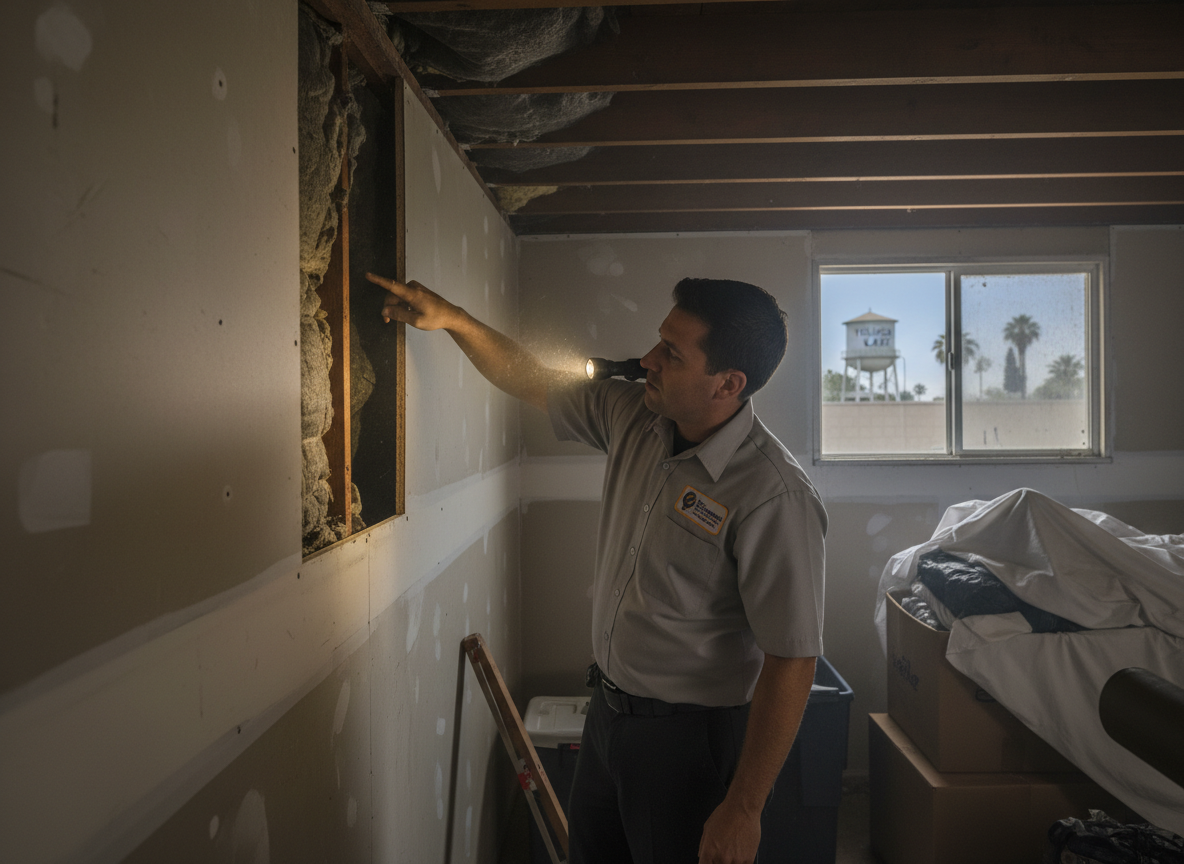
Hidden smoke damage in Toluca Lake houses frequently shows up first as faint yellowing along ceiling seams or a sharp, acrid smell that returns when humidity rises from the nearby lake. Older homes along Riverside Drive and in surrounding blocks commonly have plaster-over-lath walls and vented attics that trap fine soot particles, allowing them to migrate into living spaces weeks after the initial event.
Visible Clues in Mid-Century Construction
Toluca Lake contains many 1940s–1960s single-story homes with stucco exteriors and original wood framing. Smoke travels upward through these structures and settles on the underside of roof sheathing and in the spaces between ceiling joists. Homeowners often notice gray or brown staining that appears only after rain or when the HVAC runs, because the particles shift with air pressure changes. Baseboards and electrical outlets in bedrooms and kitchens are frequent collection points; removing a cover plate may reveal soot lines along the wire runs. Checking these spots requires a bright flashlight and a white cloth test—wiping a small area leaves a dark residue that does not come from normal dust.
Attic and Insulation Inspection Steps
Start in the attic by looking along the rafters and on top of insulation batts for a fine, oily film. In Toluca Lake properties the original rock-wool or fiberglass insulation can hold smoke odor for months if not addressed. Use a moisture meter on wood members; readings above 15 percent often indicate that smoke has combined with morning dew from the valley climate and created hidden corrosion on metal fasteners. Count the number of affected rafter bays rather than guessing—damage confined to three or four bays near a kitchen or bedroom wall typically points to the fire origin and limits the scope of needed work.
Odor Patterns and Wall Cavity Testing
Persistent odors in closets or behind built-in cabinetry usually mean smoke has entered the stud bays through electrical penetrations or HVAC ducts. In homes near Universal City or North Hollywood, shared walls with neighboring structures can allow cross-contamination if a fire occurred on an adjacent lot. A simple test involves cutting a small inspection hole in an inconspicuous location and inserting a borescope; visible soot on the back of drywall or on wiring insulation confirms migration. Homeowners should avoid sealing these areas with paint until the source is removed, because trapped particles will continue to off-gas.
When Professional Assessment Is Needed
If discoloration or odors appear in more than two rooms or if the attic shows widespread film on insulation, contact a specialist for smoke remediation and soot removal. Local teams familiar with San Fernando Valley construction know how to isolate affected cavities without disturbing the original plaster finishes common on Toluca Lake blocks. For cost context, review Typical Costs For Fire Restoration In The San Fernando Valley and Soot Removal From Older Toluca Lake Properties before scheduling an inspection. Early identification prevents secondary issues such as corrosion on copper pipes and HVAC coils that are expensive to replace later.